Love You Dad: A Designer’s Review for Merch
As an embroidery designer who has spent years digitizing and testing files for commercial use, I approach every new machine embroidery design with a critical eye. It is not just about whether the artwork looks cute on a screen; it is about how it performs under the needle, how it holds up after fifty washes, and how it elevates a brand’s perceived value. Recently, I reviewed the Love You Dad design, a piece categorized under Father-themed Embroidery. While the sentiment is universal, my focus here is strictly on its viability for small business merchandise, branded patches, and custom apparel lines.
First Impressions: Balancing Sentiment with Professionalism
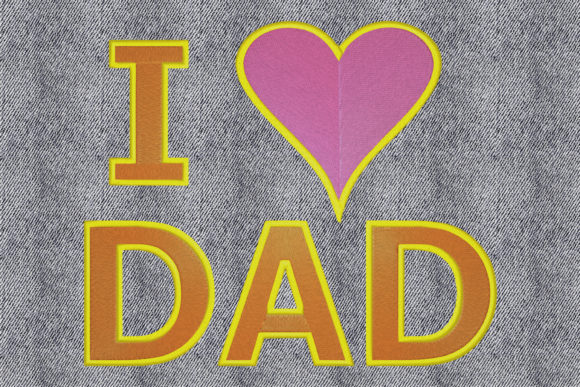
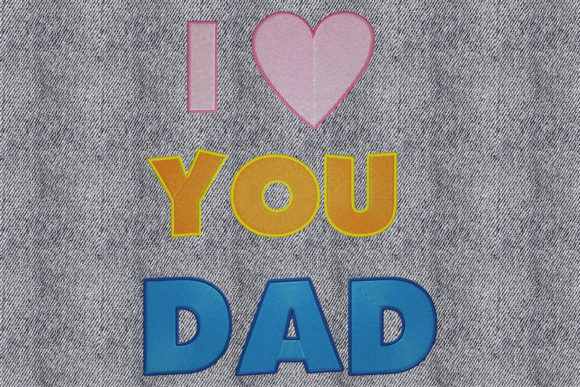
The immediate visual impact of Love You Dad suggests a blend of warmth and classic appeal. In the world of small business merch, emotional connection drives sales. This design does not scream "corporate coldness"; instead, it offers a friendly, handmade aesthetic that resonates with boutique buyers. For a café owner selling branded goods or a florist creating gift bundles, this type of imagery bridges the gap between professional service and personal touch. However, from a technical standpoint, the simplicity of the message is its greatest strength. Complex, overly decorative fonts often fail in production, but a clear, legible design like this tends to translate well across various mediums, provided the digitization supports clean stitch paths.
Real-World Applications for Small Businesses
When evaluating a digital embroidery file for commercial use, I always map out potential applications. The versatility of Love You Dad makes it a strong candidate for several key product categories.
- Branded Patches: This is perhaps the most lucrative application. An embroidered patch featuring this design can be sold as a standalone accessory or sewn onto denim jackets and tote bags. Patches allow customers to customize their own items, increasing engagement with your brand.
- Custom Apparel: For Father’s Day campaigns, this design shines on t-shirts and sweatshirts. The description notes it is suitable for these garments, which are staples in any custom apparel lineup. The key is placement; a left-chest position offers a subtle, premium look, while a large back print makes a bold statement.
- Staff Uniforms and Aprons: Imagine a family-owned bakery or a local pet groomer. Using this design on staff apron embroidery adds a layer of approachability. It signals to customers that the business values family and care, enhancing brand identity without being overtly promotional.
- Cap Embroidery: Caps are high-margin items for many shops. If the design scales down effectively, it can serve as a front-panel accent. However, curved surfaces require precise digitizing to prevent puckering, a factor we must consider during testing.
Technical Considerations and Production Challenges
While the artistic merit is clear, the technical execution determines whether a design is profitable or a production nightmare. The product description states that this machine embroidery design comes with multiple file formats. This is crucial for compatibility with different machines, but it does not guarantee optimal stitch quality. Here are the specific areas where I advise caution and rigorous testing.
Stitch Density and Fabric Texture
One of the most common pitfalls in commercial embroidery is ignoring stitch density. If the design is too dense, it will cause fabric distortion, especially on lighter materials like cotton t-shirts or linen tote bags. Conversely, if the density is too low, the underlying fabric may show through, ruining the visual consistency. When using Love You Dad on textured fabrics, such as canvas tote bag design projects, you must ensure the stitch length is adjusted to bridge the gaps in the weave. Always test on the actual fabric you intend to sell, not just standard muslin.
Small Scale Legibility
If you plan to use this as a small logo on a collar tag or a tiny pocket emblem, legibility is paramount. Tiny lettering can easily become a blob of thread if the details are too fine. I recommend running a test at the smallest intended size. If the letters merge or the spacing becomes inconsistent, the design may need to be resized or simplified for those specific applications. This is particularly important for cap embroidery, where the curved front panel limits the usable height of the design.
Color Contrast and Thread Selection
The success of any embroidery relies heavily on thread colors. For a design titled Love You Dad, traditional masculine tones like navy, charcoal, and forest green are safe bets. However, for a modern boutique, consider pastels or high-contrast combinations to make the design pop against dark uniforms. Always create a printable mockup with your chosen color palette before stitching. This helps clients visualize the finished product and reduces the likelihood of revisions.
Enhancing Brand Identity and Customer Trust
Why invest time in reviewing a specific design? Because consistency builds trust. When a customer sees high-quality embroidery on a tote bag, they subconsciously associate that quality with your entire brand. A poorly stitched logo can undermine years of marketing efforts. By choosing a well-digitized file like Love You Dad, you ensure that your design assets reflect professionalism. This is especially true for Etsy sellers and handmade brands where the "handcrafted" feel is a primary selling point. The tactile nature of embroidery adds perceived value, allowing you to charge a premium compared to printed alternatives.
Practical Designer Notes for Implementation
Before you launch this design into your production line, follow these steps to mitigate risk and ensure quality:
- Test in Black and White First: Remove color from the equation to evaluate the structural integrity of the stitches. If it looks good in monochrome, it will likely look good in color.
- Check Hoop Size Compatibility: Confirm that the design fits within your standard hoop sizes. The description mentions it is for pillows and sweatshirts, implying a medium-to-large format, but verify the exact dimensions.
- Use Proper Stabilizer: The choice of stabilizer is non-negotiable. Use cut-away stabilizer for stretchy fabrics like sweatshirts and tear-away for stable wovens like aprons. This prevents shifting and ensures crisp edges.
- Review Commercial Licensing: The description mentions the file can be used, but always double-check the license terms. Ensure you have the right to use the design for commercial embroidery projects and not just personal hobby use.
- Create Client Mockups: Use digital tools to place the design on various products. Show clients how Love You Dad looks on a cap versus a tote. Visual confirmation speeds up approval and sales.
In conclusion, Love You Dad represents a solid opportunity for small businesses looking to expand their Father-themed or family-oriented product lines. Its potential lies not just in the sentiment, but in its adaptability across patches, apparel, and accessories. By paying attention to stitch density, fabric choice, and proper stabilization, you can transform this digital file into a high-value physical product that enhances your brand’s reputation. Remember, in the world of custom merch, quality is the ultimate marketing tool.