Monkey Love Banana: A Designer’s Review for Brand Merch
As an embroidery designer who has spent years digitizing and testing files for small business merchandise, I approach every new machine embroidery design with a critical eye. It is not just about whether the image looks cute on a screen; it is about how that design translates into thread on fabric. Today, I am reviewing Monkey Love Banana, a playful Animals themed design intended for various apparel and home decor applications. For boutique owners, Etsy sellers, and creative studios, understanding the practical application of such a design is crucial for maintaining brand integrity and product quality.
First Impressions: Visual Personality and Brand Fit
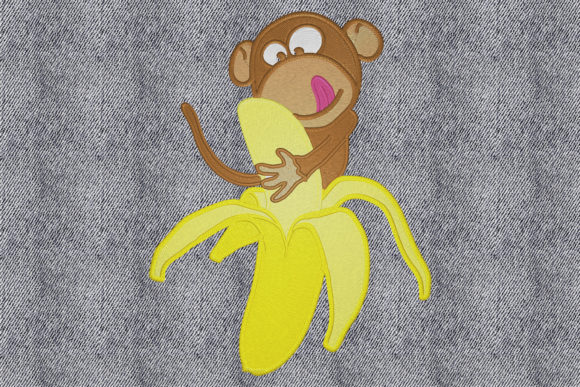
The title Monkey Love Banana immediately suggests a tone that is friendly, whimsical, and approachable. In the world of Embroidery, thematic consistency is key. This design does not aim for corporate minimalism or high-end luxury elegance. Instead, it leans heavily into a handmade, cheerful aesthetic. For businesses in the bakery, pet care, children’s retail, or local café sectors, this visual personality is an asset. It signals warmth and fun, which can significantly enhance customer engagement.
However, from a professional standpoint, "playful" must not mean "amateur." The success of this design relies on clean digitizing. When I evaluate a file like this, I look for smooth curves in the monkey’s outline and secure satin stitches for the banana details. If the design feels cluttered or lacks definition, it fails to serve as a effective brand identity marker. Based on the description provided, this is a high-quality design suitable for pillows, t-shirts, and sweatshirts, suggesting a versatility that appeals to makers looking to expand their small business merch lines.
Real-World Applications for Small Businesses
Let us move beyond theory and discuss where Monkey Love Banana actually works in a commercial setting. The versatility of a digital embroidery file is determined by its scalability and adaptability to different garments.
- Embroidered Patches: This is perhaps the strongest use case. A well-digitized monkey and banana motif makes for an excellent iron-on or sew-on patch. Patches allow businesses to add branded elements to denim jackets, canvas bags, or hats without committing to full-front embroidery. It creates a collectible feel for customers.
- Staff Uniforms and Aprons: For a family-friendly café or a pet grooming salon, placing this design on the chest pocket of an apron embroidery project adds character. It breaks the monotony of standard uniforms and serves as a conversation starter with clients.
- Cap Embroidery: Using this as a side-panel detail or a small front-center logo on dad hats can work well, provided the design is simplified. Caps have limited space, so the "love" aspect of the design needs to be legible at a smaller scale.
- Tote Bag Design: Canvas totes are staples for craft fairs and boutique giveaways. A larger version of this design centered on a tote bag creates a high-impact custom apparel piece that customers are likely to use daily, increasing brand visibility.
For Etsy sellers and handmade brands, this design can also serve as a seasonal accent. Think of it on baby onesies, nursery decor pillows, or as a charming detail on reusable produce bags. The key is aligning the whimsical nature of the monkey with products that already carry a soft, nurturing, or fun vibe.
Technical Considerations and Production Challenges
While the concept is strong, the execution requires careful attention to technical details. As a designer, I advise caution in several areas when working with character-based designs like Monkey Love Banana.
Stitch Density and Fabric Texture: Character designs often involve small details, such as facial features or text. If the stitch density is too high, the fabric may pucker, especially on lighter materials like cotton t-shirts. Conversely, if the density is too low on thick fabrics like fleece sweatshirts, the underlying material might show through. Always test on the actual fabric you intend to use. The interaction between thread and fabric texture can drastically change the finished look.
Size Limitations: Do not assume this design will scale down infinitely. Tiny lettering or intricate outlines in the monkey’s fur may become a blob of thread if reduced below a certain threshold. Before running a production batch, stitch out a sample at the smallest size you plan to offer. If the details merge, you may need to request a simplified version or limit the minimum size for that specific item.
Thread Colors and Contrast: This design likely relies on specific color palettes—browns for the monkey, yellows for the banana. Ensure you have high-quality threads that match these hues. On dark uniforms, you may need to adjust the design to include a white underlay or outline to ensure the monkey pops against the background. Poor contrast can make even the best design look muddy and unprofessional.
Enhancing Brand Identity and Customer Trust
Why invest in a specific design like Monkey Love Banana? Because consistent, high-quality visuals build trust. When a customer receives a finished product with clean, crisp embroidery, it reflects positively on your business standards. Sloppy stitching or poorly chosen designs can undermine perceived value.
Using this design across multiple touchpoints—such as on packaging inserts, staff shirts, and social media printable mockup images—creates visual consistency. It helps customers recognize your brand instantly. For handmade product creators, offering items with unique, well-executed embroidery sets you apart from drop-shippers using generic prints. It adds a tactile, premium quality that buyers are willing to pay for.
Practical Designer Notes for Implementation
Before you purchase and produce, follow these steps to ensure success with your commercial embroidery projects:
- Check File Formats: The description mentions multiple embroidery file formats. Ensure the format matches your machine (e.g., PES, DST, JEF). Incorrect formats can lead to reading errors and wasted time.
- Verify Hoop Size: Confirm the required hoop size before starting. You do not want to begin a project only to realize the design exceeds your machine’s maximum area.
- Use Proper Stabilizer: The choice of stabilizer is critical. For stretchy fabrics like t-shirts, use a cut-away stabilizer to prevent distortion. For woven fabrics like tote bags, a tear-away may suffice. The right stabilizer ensures the design remains flat and professional.
- Create a Mockup: Use digital tools to place the design on photos of your actual products. This helps you visualize scale and placement before stitching a single thread. It is also useful for client approval if you are doing custom work.
- Confirm Licensing: Always read the license terms associated with the embroidery file. Ensure you have the rights to use the design for commercial purposes, especially if you are selling the finished items rather than just using them for internal branding.
- Test Run: Never skip the test stitch. Run the design on a scrap piece of the same fabric and stabilizer combination. Check for thread breaks, nesting, or registration issues.
In conclusion, Monkey Love Banana offers a charming addition to the toolkit of small business owners and embroidery professionals. Its strength lies in its ability to convey friendliness and warmth, making it ideal for specific niches within the Animals and lifestyle categories. By respecting the technical limitations of embroidery and focusing on high-quality production standards, you can transform this digital asset into a powerful tool for brand building and customer connection. Whether used on a cozy pillow or a staff apron, the key is intentionality in placement and precision in execution.