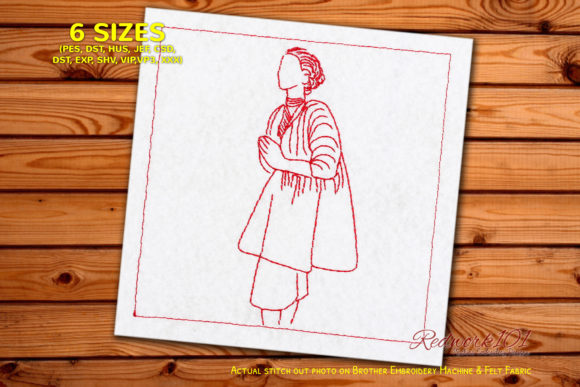
Review: Woman Praying Lineart for Branded Merch
As an embroidery designer who has spent years digitizing and testing files for small businesses, I approach every new machine embroidery design with a critical eye. It is not just about whether the image looks pretty on a screen; it is about how that design translates into thread, how it holds up on fabric, and ultimately, how it serves the brand identity of the business using it. Today, I am reviewing the Woman Praying Lineart design, a piece that sits firmly within the Religion and Embroidery niche but offers versatile applications for modern branded merchandise.
The first impression of this lineart is one of understated elegance. Unlike bold, heavy logos that shout for attention, this design whispers. The use of clean lines suggests a modern, minimalist aesthetic that appeals to contemporary consumers who value subtlety over ostentation. For small business owners, particularly those in the handmade product sector, this visual personality is a significant asset. It feels professional yet approachable, striking a balance between spiritual reverence and commercial viability.
Visual Personality and Brand Alignment
When evaluating Woman Praying Lineart for business use, we must consider the emotional response it triggers. The silhouette of a woman in prayer is universally recognized, conveying peace, hope, and devotion. For a boutique, a creative studio, or a faith-based organization, this imagery reinforces a brand identity centered on care, community, and tranquility. It is not merely decorative; it is communicative.
The description notes that "The Box Stitch shown in the picture is optional." This is a crucial detail for designers. The ability to remove the outer box allows the design to breathe. Without the box, the lineart becomes more organic and fluid, making it ideal for items where a rigid geometric frame might feel out of place, such as on curved surfaces or soft textiles. If the box is retained, it provides a structured boundary that can help contain the design on smaller patches, ensuring the edges remain crisp.
Real-World Applications for Small Business Merch
Let us look at how this digital embroidery file performs in real-world scenarios. For apparel decorators and Etsy sellers, versatility is key. Here is how I envision this design working across different product lines:
- Custom Apparel and Uniforms: Placed on the left chest of a work shirt or polo, this design serves as a subtle identifier for staff in hospices, counseling centers, or religious bookstores. It adds a layer of professionalism without overwhelming the uniform.
- Apron Embroidery: For bakeries, florists, or craft studios that want to convey a sense of mindful creation, embroidering this lineart on the bib of an apron creates a powerful narrative. It suggests that the work being done is performed with intention and care.
- Cap Embroidery: On the front panel of a dad hat or baseball cap, the lineart style works well because it avoids excessive stitch density. However, placement is critical. The design must be centered correctly to account for the curve of the cap.
- Tote Bag Design: Canvas tote bags are a staple for small business merch. A larger version of this design, perhaps with the optional box removed, can serve as a central focal point. The contrast of dark thread on natural canvas creates a rustic, handmade appeal that customers love.
- Embroidered Patches: Creating iron-on or sew-on patches is a fantastic way to monetize this design. Patches allow customers to customize their own jackets or bags, increasing engagement with your brand.
Technical Considerations for Production
While the aesthetic is strong, the technical execution determines the quality of the finished product. As a designer, I have several notes for anyone planning to use this file in commercial embroidery projects.
First, always test the design in black and white before committing to colored threads. Lineart relies heavily on contrast. If the thread color is too similar to the fabric color, the details will vanish. For dark uniforms, you may need to use a lighter thread color or add an underlay to ensure visibility. Conversely, on light fabrics, a dark navy or black thread will provide the sharpest definition.
Second, consider the stitch density. Lineart designs typically have lower density than fill-stitch designs, which is beneficial for reducing puckering on lightweight fabrics. However, this also means the design may lack substance on very textured fabric. If you are embroidering on a thick towel or a rough canvas, ensure your stabilizer is robust enough to support the stitches without sinking into the pile.
The description mentions that "The color of the outer box is a different color in most of the designs unless it is part of the design itself, you can skip the color dir." This implies flexibility in thread changes. For efficiency in a production environment, minimizing thread changes saves time. If the box is optional, I recommend skipping it for large runs to speed up production, unless the client specifically requests the framed look for a more badge-like appearance.
Sizing and Hoop Constraints
One common mistake with lineart is scaling it down too far. Fine lines can break or become indistinguishable if the design is shrunk below a certain threshold. Before producing small patch sizes or sleeve details, check the minimum recommended hoop size and dimensions provided with the file. If these specifics are not included in the download, you must perform a test stitch on scrap fabric of the same type you intend to use. Look for thread breaks or lost details in the hands or face of the figure.
For curved surfaces like caps or sleeves, avoid placing the design too close to seams. The distortion caused by the curve can warp the linear elements, making the praying figure appear skewed. Always create a printable mockup to visualize the placement before hooping the actual garment.
Enhancing Brand Identity and Customer Trust
Using high-quality design assets like Woman Praying Lineart directly impacts customer trust. A sloppy embroidery job with tangled threads or misaligned shapes signals a lack of attention to detail. In contrast, a clean, crisp execution of this lineart signals professionalism. It tells the customer that the brand values quality.
For handmade brands, this design can be used on product packaging accents or as a tag on clothing items. It becomes a signature mark, much like a painter’s signature on a canvas. This consistency helps build brand recognition. When customers see this specific lineart, they should immediately associate it with your shop’s values of faith, creativity, or compassion.
Final Designer Recommendations
Before integrating Woman Praying Lineart into your product lineup, follow this checklist:
- Verify Licensing: Confirm commercial licensing terms. Ensure you have the right to sell physical products featuring this design.
- Test on Real Fabric: Do not rely solely on digital simulations. Stitch out the design on the exact fabric weight and texture you plan to sell.
- Check Stabilizer Compatibility: Use a cut-away stabilizer for stretchy fabrics and a tear-away for stable wovens. The right stabilizer prevents distortion.
- Evaluate Thread Contrast: Ensure the thread colors stand out against the background material. High contrast is essential for lineart legibility.
- Review File Details: Since the prompt does not specify exact stitch counts or formats, check the downloaded file metadata. Ensure you have the correct format for your embroidery machine (e.g., PES, DST, JEF).
In conclusion, Woman Praying Lineart is a versatile and meaningful addition to any embroidery designer’s library. It bridges the gap between spiritual expression and commercial application, offering a refined look for small business merch. Whether used on an apron, a cap, or a tote bag, it has the potential to elevate your brand identity and connect deeply with your audience. Treat it with the technical respect it deserves, and it will serve your business well.